학교
[EAP] 4주차 2차시
Instrumental Set
• People who relate more to the direct set can generally view the instrumental people with skepticism and distrust.
직접적인 방식을 더 선호하는 사람들은 대개 도구적 성향의 사람들을 의심과 불신의 눈으로 바라본다.
• Instrumental achievers are known to charm people and have a clever sense of humor that many find attractive
도구적 성취자들은 사람들을 매혹시키고 많은 이들이 매력적이라고 생각하는 영리한 유머 감각을 가진 것으로 알려져 있다.
• They can seem extremely self-confidence to the point of appearing arrogant
그들은 오만해 보일 정도로 극도로 자신감 있게 보일 수 있다.
• They are socially very successful – they seem to know everyone 그들은 사회적으로 매우 성공적이며 – 모든 사람을 아는 것처럼 보인다.
• They focus more on the connections rather than the divisions between people 그들은 사람들 사이의 분열보다는 연결에 더 초점을 맞춘다.
• They recognize the importance of information: they receive and give valuable knowledge that develops and integrates the different components of the system
그들은 정보의 중요성을 인식한다: 시스템의 다양한 구성 요소를 발전시키고 통합하는 귀중한 지식을 주고받는다.
• They have a strong political sensibility: they know who knows who, who controls what, and how they do it
그들은 강한 정치적 감각을 가지고 있다: 누가 누구를 아는지, 누가 무엇을 통제하는지, 그리고 그것을 어떻게 하는지 안다.
• They are important people for community building and can facilitate community-level conversation – they are good at avoiding negative things that can hinder group communication
그들은 공동체 구축에 중요한 사람들이며 공동체 수준의 대화를 촉진할 수 있다 – 그룹 소통을 방해할 수 있는 부정적인 것들을 피하는 데 능숙하다.
• Whereas direct achievers are focused on themselves, their relationships, and others to get what they want, instrumental achievers focus on the strengths – they calculate their own usefulness and the usefulness of others to reach their goals
직접적 성취자들이 자신, 자신의 관계, 그리고 원하는 것을 얻기 위한 다른 사람들에 집중하는 반면, 도구적 성취자들은 강점에 초점을 맞춘다 – 자신과 다른 사람들의 유용성을 계산한다.
• They will bend their personalities and talents, even their relationships with family, friends, colleagues, and casual acquaintances, in the service of their accomplishments.
그들은 자신의 성과를 위해 자신의 성격과 재능, 심지어 가족, 친구, 동료, 그리고 사교적 지인들과의 관계까지도 굽힐 것이다.
• They still want to define the goal but will delegate to others
그들은 여전히 목표를 정의하고 싶어하지만 다른 사람들에게 위임할 것이다.
The Personal Style
• The personal style is the most easily recognizable among the instrumental set. 개인적 스타일은 도구적 집단 중에서 가장 쉽게 알아볼 수 있다.
• Personal achievers use everything they have to achieve success: their intellect, wit (often self-deprecating), charm, physical attractiveness, sexuality, oratorical skills, and persuasive talents, social status, past achievements, family history (if noble background) 개인적 성취자들은 성공을 위해 자신이 가진 모든 것을 활용한다: 자신의 지성, 기지(종종 자기 비하적인), 매력, 신체적 매력, 성적 매력, 웅변 능력, 설득력 있는 재능, 사회적 지위, 과거의 성과, 가족 배경(고귀한 배경인 경우)
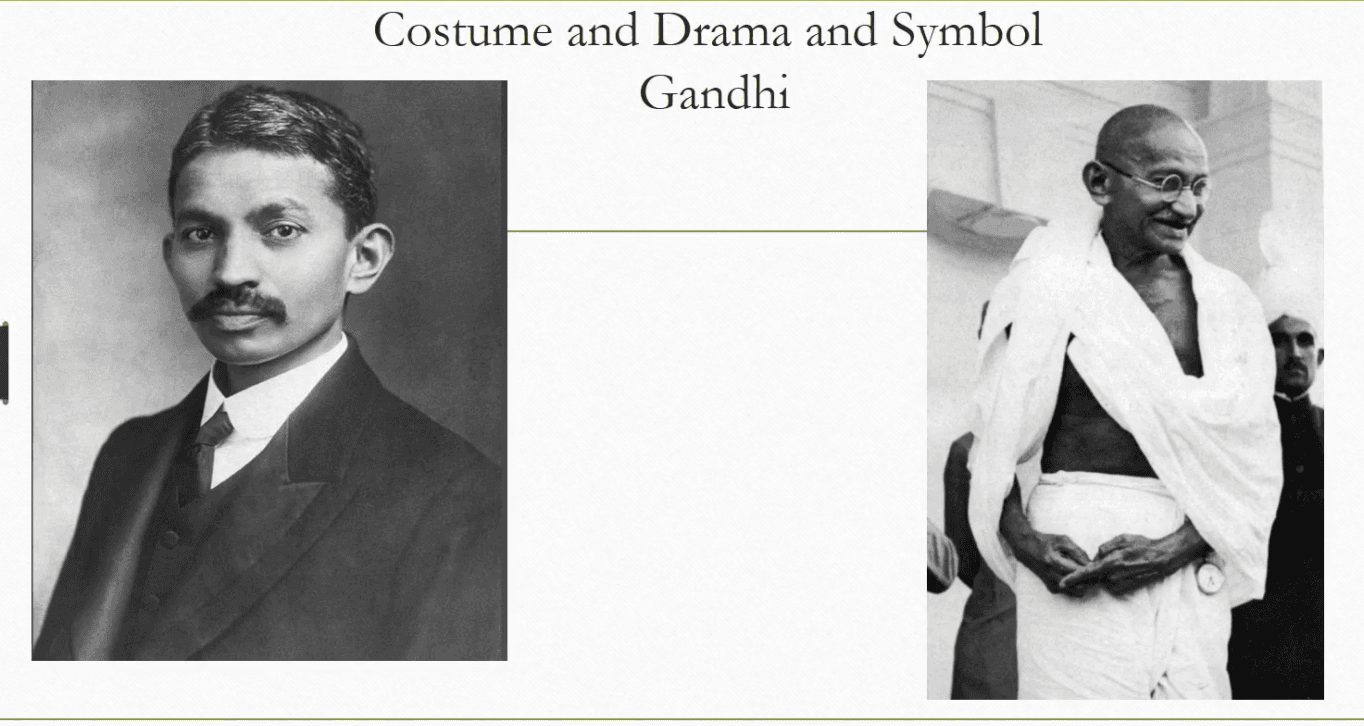
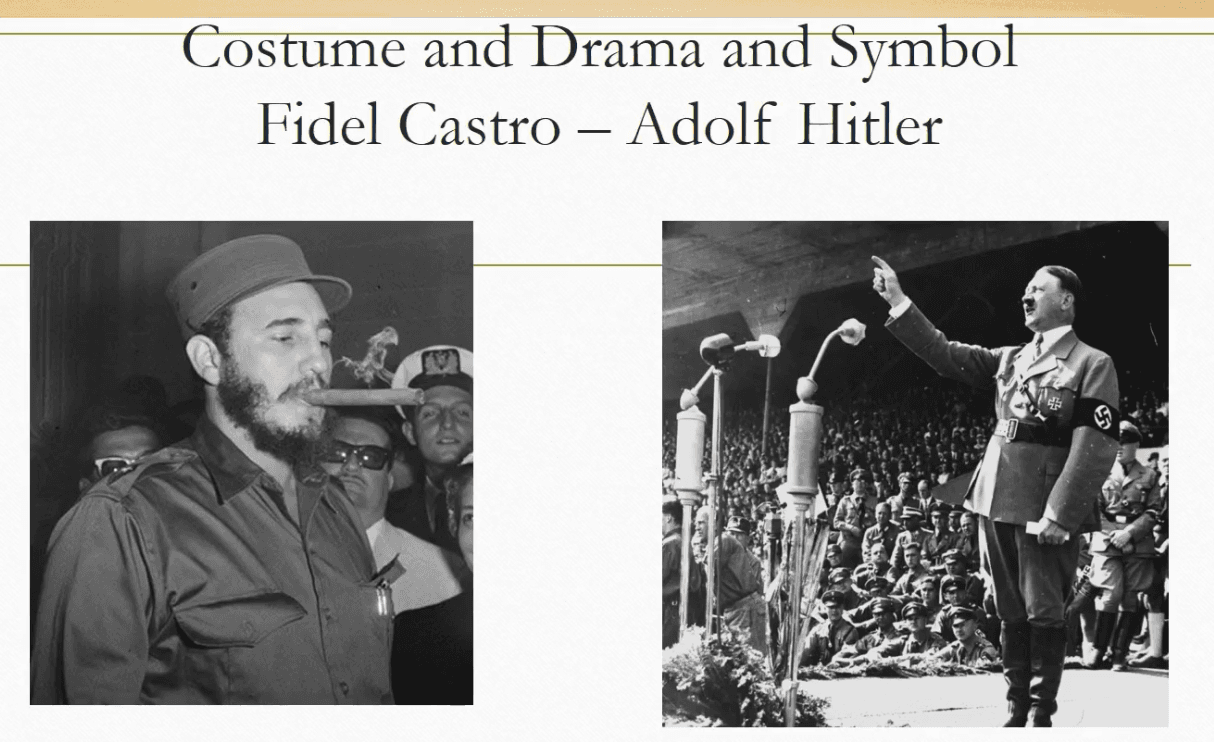
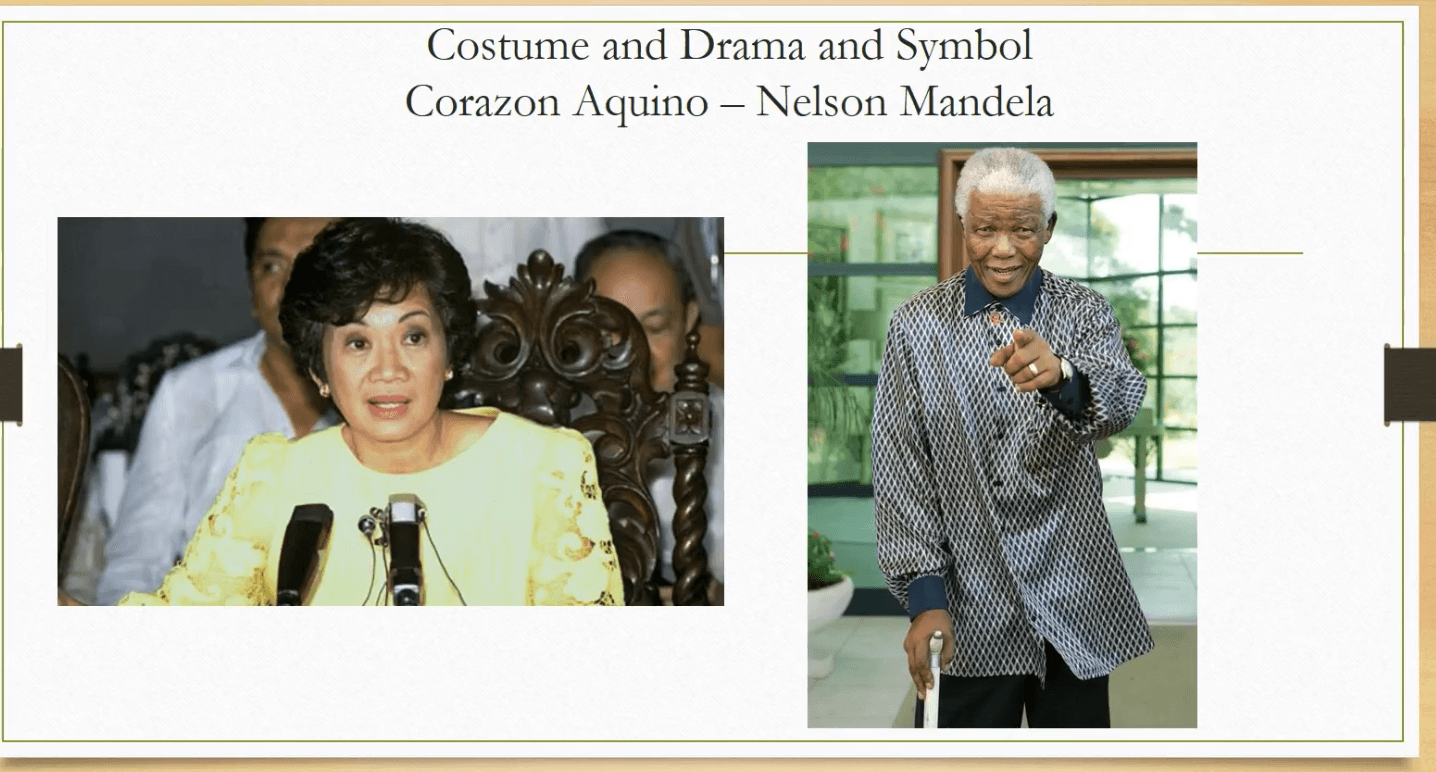
The Personal Style Costume as Drama and Symbol드라마이자 상징으로서의 개인 스타일 의상
- Personal achievers exploit the symbolism of dress
- 개인적 성취를 이룬 사람들은 복장의 상징성을 활용합니다.
- They seem to select just the right symbols to communicated and attract others to their cause
- 그들은 자신의 대의에 다른 사람들을 끌어들이고 소통하기 위해 적절한 상징을 선택하는 것 같습니다.
Henry Kissinger헨리 키신저
Costume and Drama and Symbol
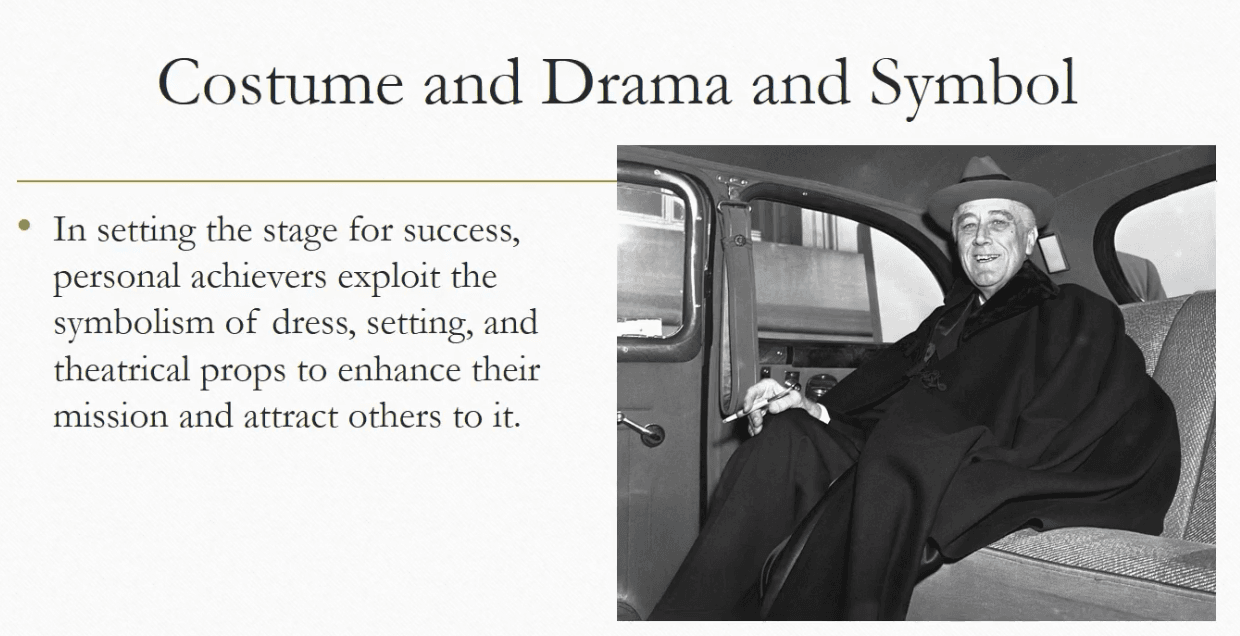
- In setting the stage for success, personal achievers exploit the symbolism of dress, setting, and theatrical props to enhance their mission and attract others to it.
성공을 위한 무대를 마련할 때, 개인적 성취자들은 자신의 미션을 강화하고 다른 이들을 끌어들이기 위해 의상, 배경, 극적 소품의 상징성을 활용한다.
- President Franklin Roosevelt (right)
Costume and Drama and Symbol Gandhi
Costume and Drama and Symbol Fidel Castro - Adolf Hitler
Costume and Drama and Symbol Corazon Aquino - Nelson Mandela
The Seed of Charisma : Drama, Symbolism, and Counterintuitive Action
- Personal achievers' sharp sense of drama is not limited to the costumes they wear. They use many forms of symbolism, rituals, gestures, and timing with exquisite effect. They pinpoint just the right moment to make a dramatic entrance, launch an attack, or exit with style and originality. In so doing, their own persona becomes the magnet for attracting others to join their cause.
개인적 성취자들의 날카로운 드라마 감각은 그들이 입는 의상에 국한되지 않는다. 그들은 정교한 효과를 위해 상징주의, 의식, 제스처, 그리고 타이밍의 많은 형태를 사용한다. 극적인 입장, 공격, 혹은 스타일과 독창성을 가진 퇴장을 위해 딱 알맞은 순간을 정확히 집어낸다. 이렇게 함으로써, 그들 자신의 페르소나는 자신의 대의에 다른 이들을 끌어들이는 자석이 된다.
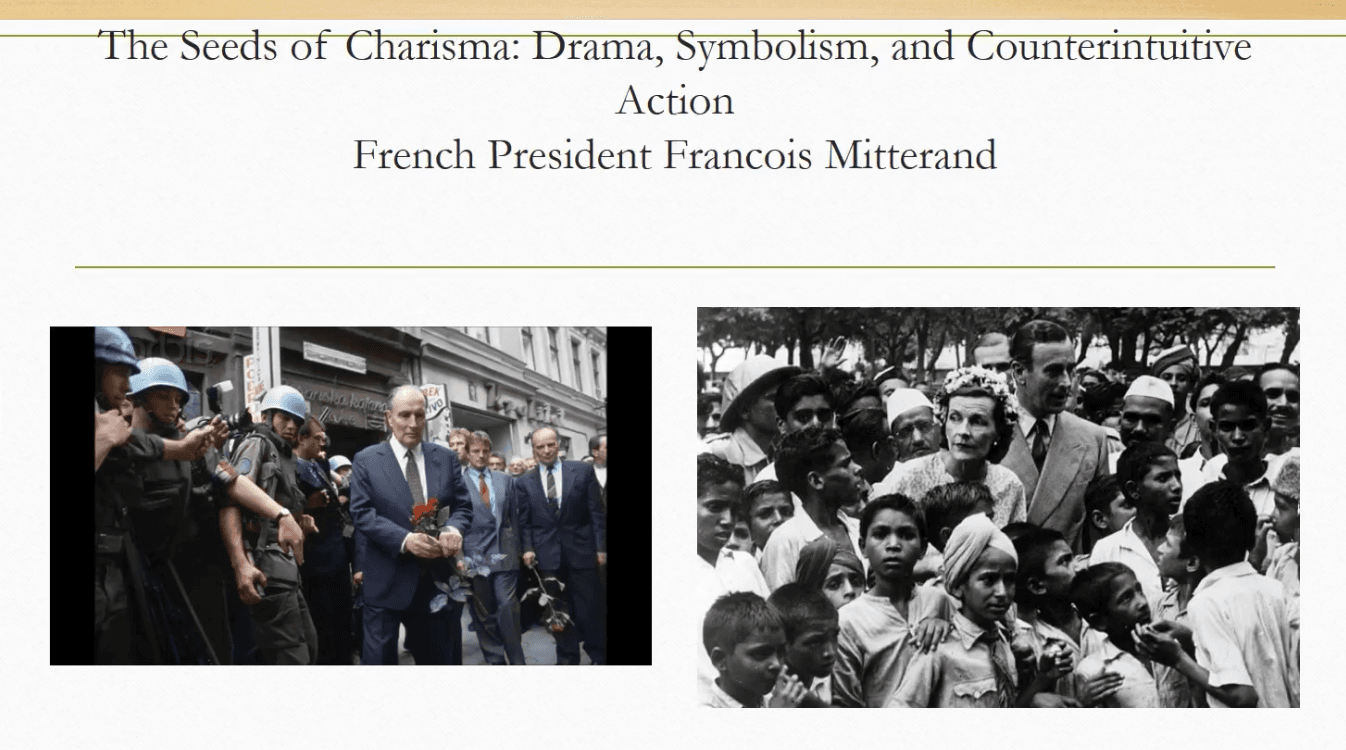
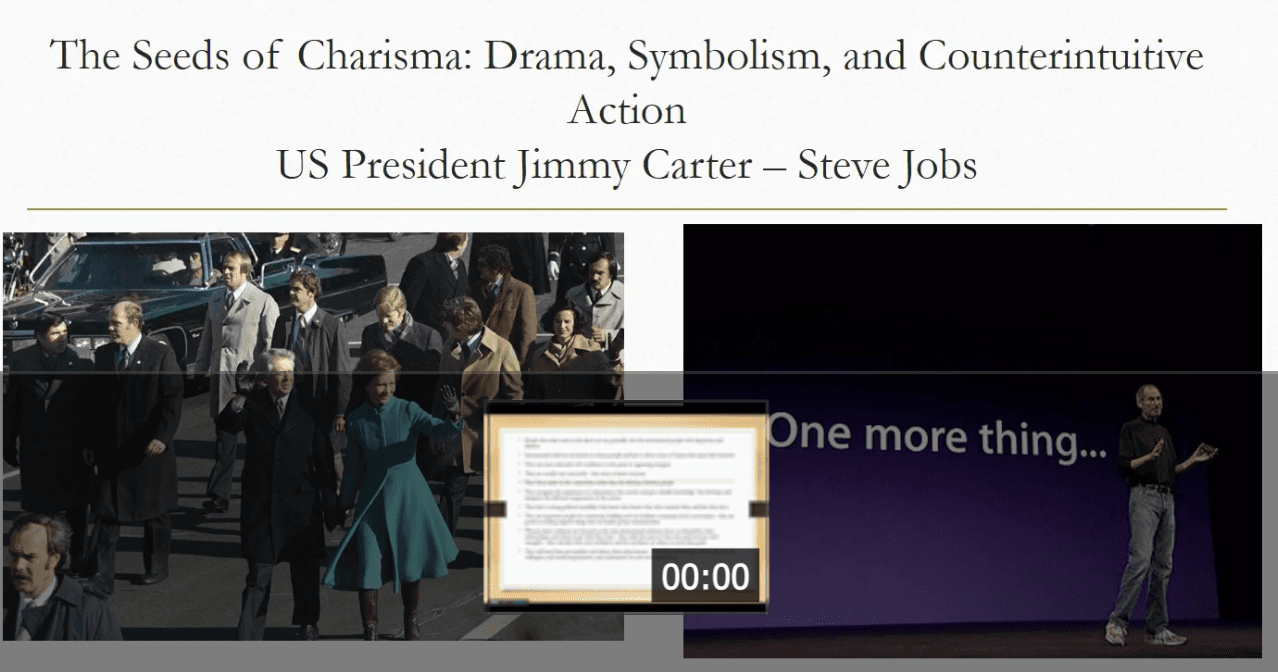
- They rely heavily on counterintuitive gestures and symbols that captivate our imagination and make permanent memories.
그들은 우리의 상상력을 사로잡고 영구적인 기억을 만드는 직관에 반하는 제스처와 상징에 크게 의존한다.
- Counterintuitive actions bypass our rational defenses and tap into the deep emotional reservoirs that followers bring to the leader/constituent relationship.
직관에 반하는 행동은 우리의 합리적 방어막을 우회하고 추종자들이 지도자/구성원 관계에 가져오는 깊은 감정적 저수지에 접근한다.
The Seed of Charisma : Drama, Symbolism, and Counterintuitive Action French President Francois Mitterand
The Seed of Charisma : Drama, Symbolism, and Counterintuitive Action US President Jimmy Carter - Steve Jobs
The Role of Humor : Self-Deprecating Wit
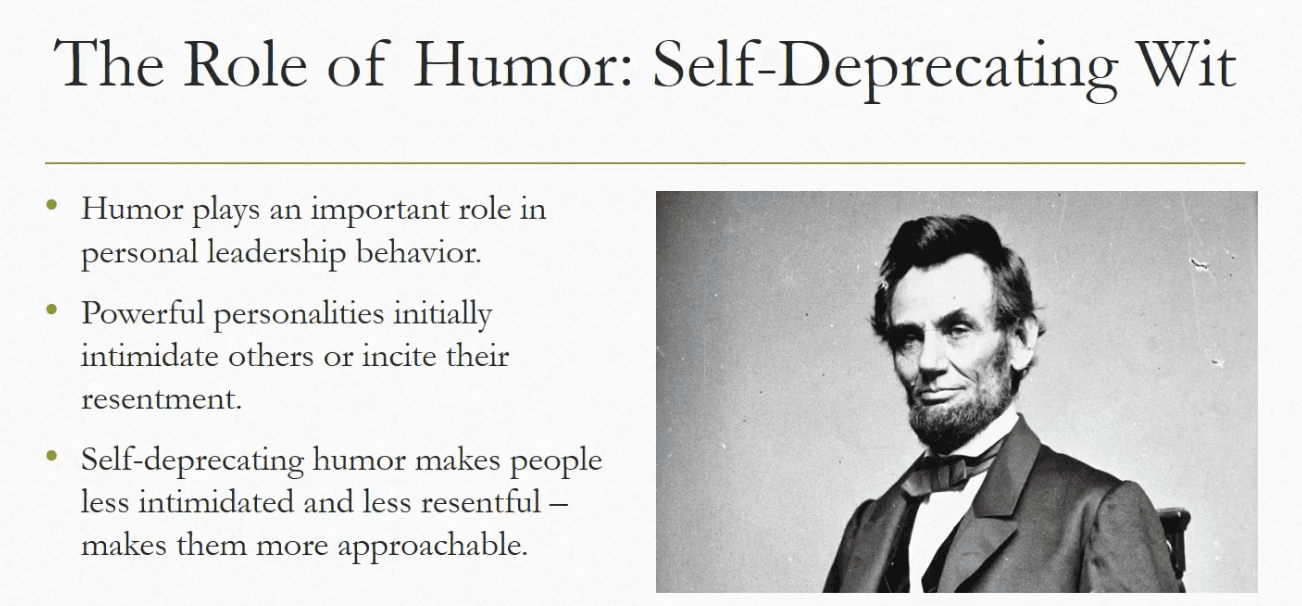
- Humor plays an important role in personal leadership behavior.
유머는 개인적 리더십 행동에서 중요한 역할을 한다.
- Powerful personalities initially intimidate others or incite their resentment.
강력한 개성을 가진 사람들은 처음에 다른 이들을 위협하거나 그들의 분노를 불러일으킨다.
- Self-deprecating humor makes people less intimidated and less resentful – makes them more approachable.
자기 비하적 유머는 사람들을 덜 위협적이고 덜 분개하게 만들어 – 그들을 더 친근하게 만든다.

The Social Style
• This is a shift from the persona of the leader to the leader's relationships 이것은 리더의 페르소나에서 리더의 관계로의 전환이다.
• Rather than relying exclusively on themselves, these achievers use relationships with others as instruments to achieve goals. 자신들에게만 전적으로 의존하는 대신, 이러한 성취자들은 목표를 달성하기 위한 수단으로 다른 사람들과의 관계를 활용한다.
• Everyone they meet becomes someone they can potentially use 그들이 만나는 모든 사람은 잠재적으로 활용할 수 있는 사람이 된다.
• They pay attention to new people they meet and their special talents and connections 그들은 새로 만난 사람들과 그들의 특별한 재능 및 연결고리에 주목한다.
• They have a complex understanding of human interaction and appreciate how human relationships help things running in an organization. 그들은 인간 상호작용에 대한 복합적인 이해를 가지고 있으며, 인간관계가 조직 운영을 어떻게 도와주는지 인식한다.
• They have a strong political sense – they identify who can be an ally or enemy 그들은 강한 정치적 감각을 가지고 있다 – 누가 동맹이 될 수 있고 누가 적이 될 수 있는지 식별한다.
• Using their many contacts, social achievers seek and offer the latest information – a valuable resource in any organization. 많은 연락처를 활용하여, 사회적 성취자들은 최신 정보를 찾고 제공한다 – 모든 조직에서 귀중한 자원이다.
• They form their own informal networks that can function within and between complex organizations 그들은 복잡한 조직 내부와 조직 간에 기능할 수 있는 자신만의 비공식적 네트워크를 형성한다.
• They call on relationships without embarrassment, guilt or discomfort 그들은 부끄러움, 죄책감, 또는 불편함 없이 관계를 활용한다.
• They value relationships inside and outside their organization because they realize that key decisions are often made in the organization's informal system. 그들은 조직 내부와 외부의 관계를 중요하게 여긴다. 왜냐하면 주요 결정들이 종종 조직의 비공식적 시스템에서 이루어진다는 것을 깨닫기 때문이다.
The Social Sytle First, WHom They Know; Then What They Know
• Social achievers think in terms of connections, who can help whom, who is the expert on a certain issue, or who is that expert's expert.
사회적 성취자들은 연결의 관점에서 생각한다. 누가 누구를 도울 수 있는지, 특정 문제에 대한 전문가는 누구인지, 또는 그 전문가의 전문가는 누구인지를 고려한다.
• Given a difficult job, social achievers often attack the problem by thinking first about whom they know, then about what they know.
어려운 일을 맡겼을 때, 사회적 성취자들은 자신이 아는 사람을 먼저 생각한 후, 자신이 아는 것에 대해 생각하며 문제에 접근한다.
• They prefer gathering information through people, preferably experts, friends, and friends of friends, rather than through library or computer searches.
그들은 도서관이나 컴퓨터 검색보다는 사람들을 통해 정보를 수집하는 것을 선호한다. 특히 전문가, 친구, 친구의 친구들을 통해 정보를 얻는다.
Lillian Gallo - Film Producer
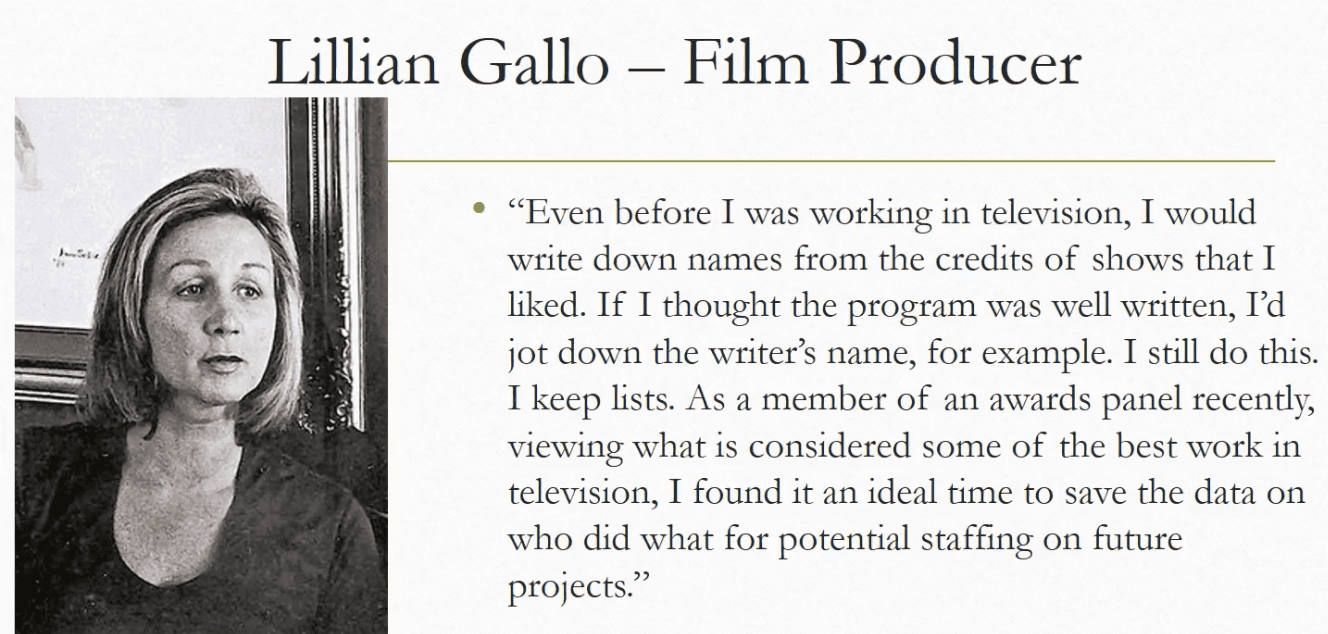
"Even before I was working in television, I would write down names from the credits of shows that I liked. If I thought the program was well written, I'd jot down the writer's name, for example. I still do this. I keep lists. As a member of an awards panel recently, viewing what is considered some of the best work in television, I found it an ideal time to save the data on who did what for potential staffing on future projects."
"텔레비전에서 일하기 전부터 제가 좋아하는 프로그램의 크레딧에 있는 이름들을 적어왔어요. 프로그램이 잘 쓰였다고 생각되면, 예를 들어 작가의 이름을 메모했죠. 저는 아직도 이렇게 합니다. 리스트를 만드는 거죠. 최근에 어워드 패널의 일원으로서 텔레비전에서 최고로 여겨지는 작품들을 보면서, 앞으로의 프로젝트를 위한 잠재적 스태핑에 대한 데이터를 저장하기에 이상적인 시간이라고 생각했어요."
The Entrusting Style
• Closely related to the social style. 사회적 스타일과 밀접하게 연관되어 있다.
• Entrusting achievers believe the world is simply filled with people ready and willing to help them achieve their ends. 위임형 성취자들은 세상이 그들의 목표를 달성하는 데 도움을 주고자 하는 사람들로 가득 차 있다고 믿는다.
• They are different than social achievers because they don't worry so much about contacts and networks – they just assume that everyone in their orbit wants to get involved and help 그들은 사회적 성취자들과는 다르다. 연락처와 네트워크에 대해 그렇게 걱정하지 않으며 – 자신의 주변 사람들이 모두 참여하고 돕고 싶어 한다고 당연하게 여긴다.
• They strongly believe that everyone can meet a challenge, usually performing far beyond even his or her own expectations if given the opportunity – so they don't try to keep files of people with the best skills 그들은 모든 사람이 도전을 극복할 수 있다고 강하게 믿으며, 보통 기회가 주어지면 자신의 기대를 훨씬 뛰어넘는 성과를 낸다 – 따라서 최고의 기술을 가진 사람들의 파일을 유지하려 하지 않는다.
• They feel comfortable placing their most important tasks in the hands of associates, whom they rely on to fulfill their vision. 그들은 자신의 가장 중요한 과제를 자신의 비전을 실현할 것으로 믿는 동료들의 손에 맡기는 것에 편안함을 느낀다.
• They are less egocentric than personal achievers, who see themselves as the ideal instrument for carrying out their own vision, albiet with the constituents' support. 그들은 개인적 성취자들보다 덜 자기중심적이다. 개인적 성취자들은 자신을 자신의 비전을 수행하는 이상적인 수단으로 보며, 비록 구성원들의 지원을 받기는 하지만.
• They outline the goals and leave the rest up to the other party – they have a deep respect for the fruits of interdependence. 그들은 목표를 개요로 제시하고 나머지는 다른 당사자에게 맡긴다 – 상호의존의 결실에 대해 깊은 존중을 가지고 있다.
The Entrusting Style Getting the Most from Supporters
• Entrusting behavior initially may arouse much anxiety in the individual expected to perform without any clear-cut guidelines – usually, however, the goal is achieved. How?
위임형 행동은 처음에는 명확한 지침 없이 수행해야 하는 개인에게 많은 불안을 불러일으킬 수 있다 – 하지만 대개 목표는 달성된다. 어떻게?
• Individuals entrusted with the task reach deep into their own resources to find a creative solution, unconstrained by the leader's specifications.
과제를 위임받은 개인들은 리더의 세부 사항에 구애받지 않고 창의적인 해결책을 찾기 위해 자신의 내면 깊숙한 곳의 자원을 활용한다.
• Challenged by an unfamiliar task, their creative juices flow in ways that assignments from power achievers never provoked.
낯선 과제에 도전받으면, 그들의 창의성은 권력 성취자의 과제로는 결코 불러일으키지 못했던 방식으로 흐른다.
• People charged with an entrusting leader's task commonly discover they have much more to bring to their work than they originally thought, far more than simple ownership and responsibility.
위임형 리더의 과제를 부여받은 사람들은 흔히 자신이 원래 생각했던 것보다 일에 기여할 수 있는 것이 훨씬 더 많다는 것을 발견한다. 단순한 소유권과 책임감을 훨씬 넘어선다.
• This new found creativity and production makes them more loyal to the entrusting leader.
이러한 새로 발견된 창의성과 생산성은 그들을 위임형 리더에게 더욱 충성스럽게 만든다.
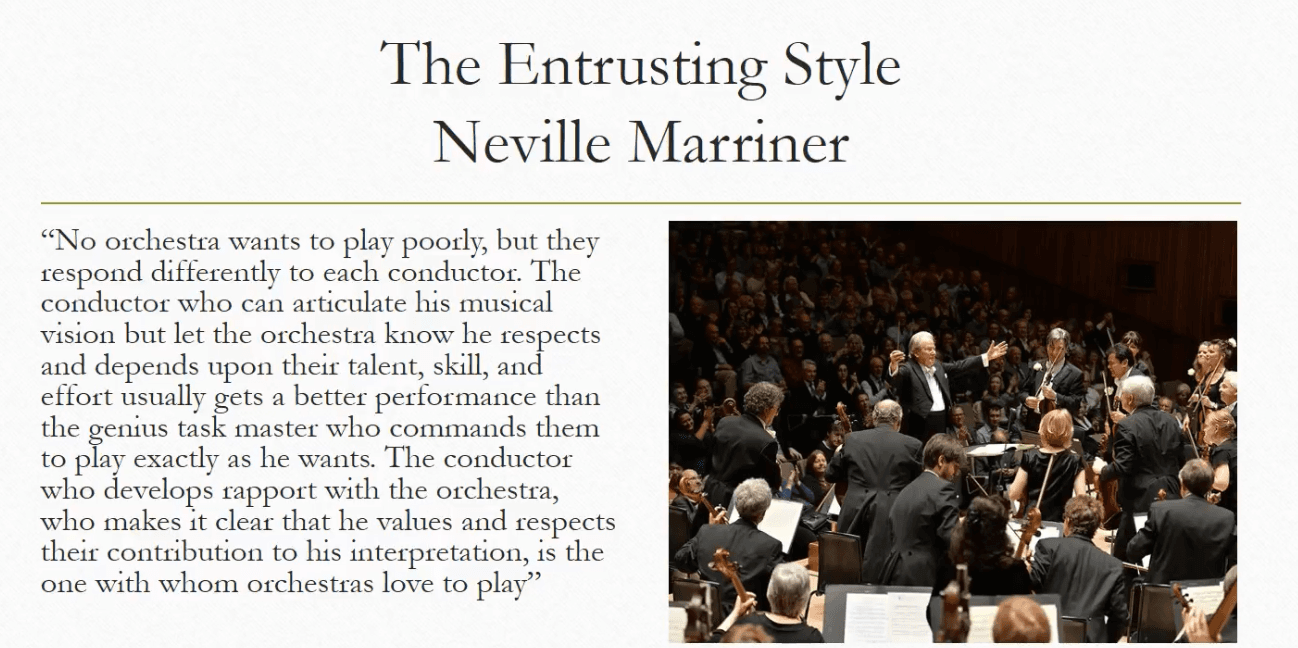
The Entrusting Style Neville Marriner
Connective Leadership Jean Lipman-Blumen
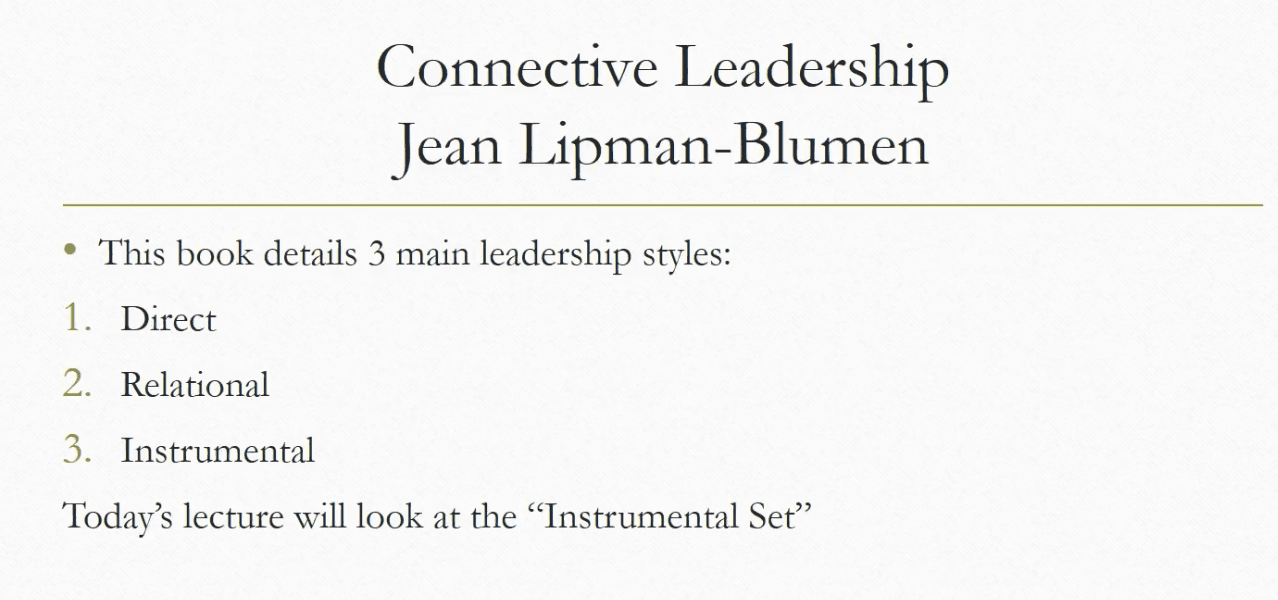
This book details 3 main leadership styles:
이 책은 3가지 주요 리더십 스타일을 상세히 다룬다:
Direct 직접적 스타일
Relational 관계적 스타일
Instrumental 도구적 스타일
Today's lecture will look at the "Instrumental Set"
오늘의 강의는 "도구적 세트"를 살펴볼 것이다
The Instrumental Set of Styles
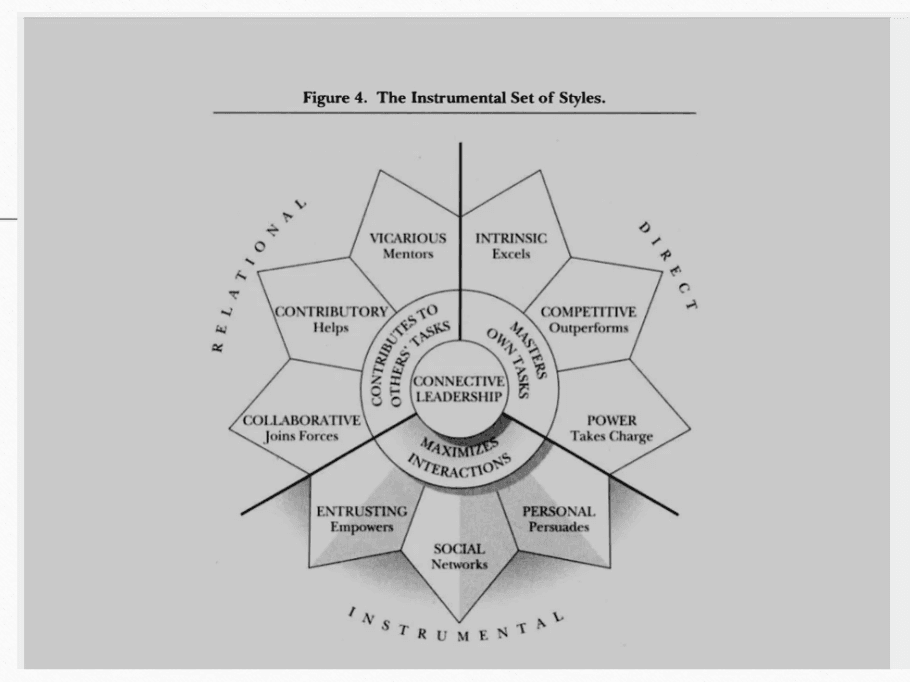
이 이미지는 Jean Lipman-Blumen의 연결적 리더십(Connective Leadership) 모델 중 도구적(Instrumental) 스타일 세트를 보여주는 다이어그램입니다.
다이어그램의 중심에는 '연결적 리더십(Connective Leadership)'이 있고, 그 주변에 8개의 다른 리더십 스타일이 배치되어 있습니다. 이 8개의 스타일은 크게 세 가지 축(Relational, Direct, Instrumental)으로 나뉘어 있습니다:
도구적(Instrumental) 축의 스타일들:
대리적 멘토(Vicarious Mentors)
본질적 탁월(Intrinsic Excels)
사회적 네트워크(Social Networks)
개인적 설득(Personal Persuades)
관계적(Relational) 축의 스타일들:
기여적 도움(Contributory Helps)
협력적 합류(Collaborative Joins Forces)
위임적 권한 부여(Entrusting Empowers)
직접적(Direct) 축의 스타일들:
경쟁적 수행(Competitive Outperforms)
권력 장악(Power Takes Charge)
중앙의 "최대화된 상호작용(Maximizes Interactions)"이라는 텍스트는 이 모델의 핵심 원칙을 나타냅니다: 효과적인 리더십은 다양한 스타일과 접근 방식을 통합하고 상호작용을 최대화하는 것입니다.
Summary
Instrumental Set of leadership
Personal Style
Personal achievers use everything they have to succeed.
They use clothing symbols to show their goals.
They rely on surprising gestures and symbols.
These capture our imagination and create lasting memories.
Social Style
Social achievers don’t rely only on themselves.
They use relationships with others to reach their goals.
They understand how human interaction
helps organizations run smoothly.
Entrusting Style
Entrusting achievers believe the world
is full of helpful people.
They don’t worry much about
contacts and networks.
They feel comfortable giving important tasks
to trusted colleagues.
도구적 세트
[1] 개인 스타일
Personal achievers use everything they have to achieve success. (개인적인 성취자는 성공을 이루기 위해 자신이 가진 모든 것을 사용한다.)
Personal achievers exploit the symbolism of dress. (개인적인 성취자는 의상의 상징성을 활용한다.)
They seem to select just the right symbols to communicate and attract others to their cause. (그들은 자신의 주장을 전달하고 다른 사람들을 자신들의 목표에 끌어들이기 위해 적절한 상징을 선택하는 것처럼 보인다.)
Personal achievers rely heavily on counterintuitive gestures and symbols that captivate our imagination and make permanent memories. (개인적인 성취자는 우리의 상상력을 사로잡고 영구적인 기억을 만드는 역설적인 제스처와 상징에 크게 의존한다.)
[2] 사회적 스타일
Rather than relying exclusively on themselves, these achievers use relationships with others as instruments to achieve goals. (이 성취자들은 자신에게만 의존하기보다는 다른 사람들과의 관계를 목표를 달성하기 위한 도구로 사용한다.)
They pay attention to new people they meet and their special talents and connections. (그들은 만나는 새로운 사람들과 그들의 특별한 재능 및 인맥에 주목한다.)
They have a complex understanding of human interaction and appreciate how human relationships help things running in an organization. (그들은 인간 상호작용에 대한 복잡한 이해를 가지고 있으며, 인간 관계가 조직 내에서 일들이 원활하게 진행되는 데 어떻게 도움이 되는지 인식한다.)
Using their many contacts, social achievers seek and offer the latest information – a valuable resource in any organization. (많은 인맥을 활용하여 사회적 성취자들은 최신 정보를 찾고 제공하며, 이는 어떤 조직에서도 귀중한 자원이다.)
They form their own informal networks that can function within and between complex organizations. (그들은 복잡한 조직 내외부에서 기능할 수 있는 비공식적인 네트워크를 형성한다.)
They call on relationships without embarrassment, guilt or discomfort. (그들은 관계를 활용하는 데 있어 당혹감이나 죄책감 없이 주저하지 않는다.)
They value relationships inside and outside their organization because they realize that key decisions are often made in the organization's informal system. (그들은 조직 내외의 관계를 소중히 여기며, 주요 결정이 종종 조직의 비공식 시스템에서 이루어진다는 것을 인식한다.)
아는 사람과 그들이 아는 것
Social achievers think in terms of connections, who can help whom, who is the expert on a certain issue, or who is that expert's expert. (사회적 성취자들은 연결의 관점에서 생각하며, 누가 누군가를 도울 수 있는지, 특정 문제에 대한 전문가는 누구인지, 그 전문가의 전문가가 누구인지 생각한다.)
Given a difficult job, social achievers often attack the problem by thinking first about whom they know, then about what they know. (어려운 작업이 주어졌을 때, 사회적 성취자들은 먼저 아는 사람에 대해 생각하고, 그 다음에 그들이 아는 것에 대해 고민한다.)
They prefer gathering information through people, preferably experts, friends, and friends of friends, rather than through library or computer searches. (그들은 도서관이나 컴퓨터 검색보다는 전문가, 친구, 친구의 친구를 통해 정보를 수집하는 것을 선호한다.)
[3] 위임 스타일
Closely related to the social style. (사회적 스타일과 밀접한 관련이 있다.)
Entrusting achievers believe the world is simply filled with people ready and willing to help them achieve their ends. (위임 성취자는 세상이 자신이 목표를 달성할 수 있도록 기꺼이 도와줄 사람들로 가득 차 있다고 믿는다.)
They are different than social achievers because they don't worry so much about contacts and networks – they just assume that everyone in their orbit wants to get involved and help. (그들은 사회적 성취자들과는 다르게 인맥과 네트워크에 대해 그리 걱정하지 않으며, 자신들의 주변에 있는 모든 사람이 참여하고 도움을 주고 싶어한다고 가정한다.)
They feel comfortable placing their most important tasks in the hands of associates, whom they rely on to fulfill their vision. (그들은 가장 중요한 작업을 신뢰하는 동료들에게 맡기는 데 편안함을 느낀다.)
They outline the goals and leave the rest up to the other party – they have a deep respect for the fruits of interdependence. (그들은 목표를 정리하고 나머지는 다른 당사자에게 맡기며, 상호 의존의 결실에 대해 깊은 존중을 가진다.)